
When Trust Deeds Go Missing: All is Not Lost!

Kellie Smythe

Share


No matter how many safeguards we put in place, at some stage we’re all likely to face that moment when we can’t locate something we need. While forgetting where you left your keys before work in the morning, or losing your scarf on the bus after watching your footy team is annoying, misplacing an important document such as a SMSF Trust Deed is entirely different.
The consequences of a lost deed can range from delays in a transaction to lack of compliance and even disputes between parties. The good news is that there are simple steps you can take to solve the problem and get back on track.
Why Misplacing a Deed is a Problem
If a constituent document such as a Trust Deed is lost, then proving the existence and continuation of a SMSF may be difficult. This can create a smorgasbord of problems including:
- Property transactions being impeded;
- Difficult dealings with banks and other 3rd parties;
- Non-compliance with AML and KYC requirements;
- Disputes between parties to the structure
Not All is Lost: How to Resolve the Issue

Hunt High and Low
First and foremost, we recommend that the Trustee and parties related or connected to the SMSF conduct an extensive search for the original executed document and all subsequent deeds. Check in both obvious places and unlikely locations. We’re talking in the personal office, boot of the car, at the SMSF Auditor’s or Accountant’s office, in a safe, or even at the gym (for those of you who love to learn about income streaming while you’re on the treadmill).
Once a thorough search is completed and you’re confident that there is no reasonable prospect for recovery of the original Deed or any other amending deed, our team at Constitute can assist in the preparation of a Deed of Confirmation.

A Deed of Confirmation Supports the Continuation of a Trust or Fund
A Deed of Confirmation is an efficient and effective solution which:
 Acknowledges that, despite extensive searches, the Trust Deed or prior amendments has been lost or destroyed
Ratifies the establishment of the Trust/Fund
Confirms that all acts done previously in relation to the SMSF are valid and effective, and that the parties will not raise the loss of the Trust Deed or prior amendments to avoid the consequences of any act that has been performed on behalf of the Fund
Adopts the provisions annexed to the Deed of Confirmation to facilitate the continuation of the Fund
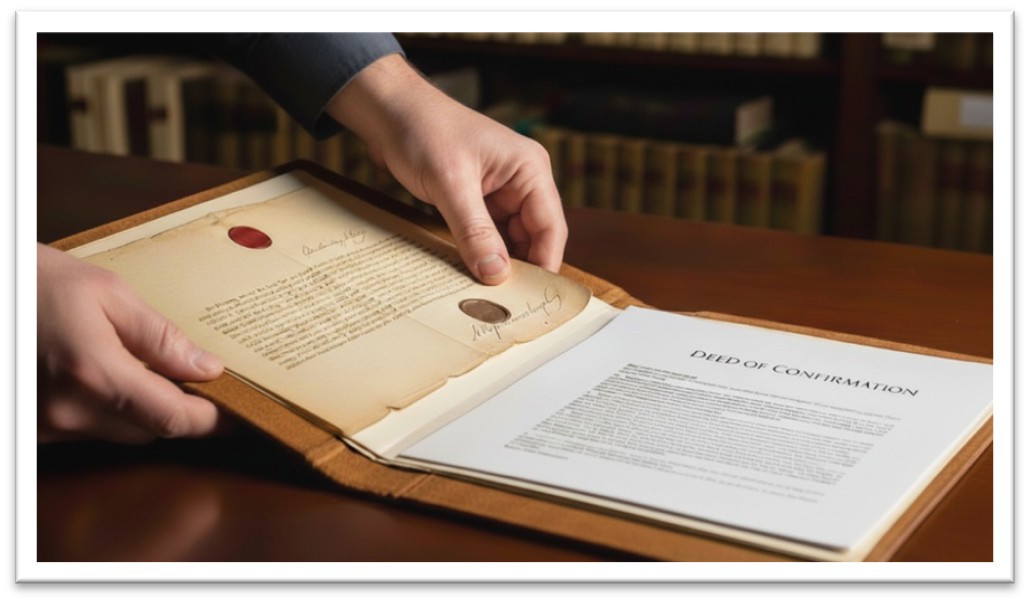
Ensuring Continuity: Annexing or Replacing Trust Provisions
The crux of the Deed of Confirmation is to adopt the provisions annexed to it in order to facilitate the continuation of the Fund. This can happen in a number of ways.
We often see the that the most recent governing rules of the Fund have been lost or destroyed. An example is a Fund established in 2000 with three subsequent variations to the Trust Deed updating the governing rules. These rules were annexed to the most recent variation in 2020 (being the current governing rules of the Fund).
In this situation, the Deed of Confirmation will acknowledge and confirm that the most recent governing rules have been lost or destroyed, and the parties will adopt new governing rules to facilitate the continuation of the Fund.
Need Help with Your Lost Trust Deed?

Our experienced team offers a dedicated Lost SMSF Deed Service and Deed of Confirmation to help trustees re-establish a compliant document trail and protect the integrity of their SMSF.
If your most recent deed has been misplaced or destroyed, we can guide you through implementing a replacement deed aligned with current legal requirements, including preparing a Deed of Confirmation if required. Please get in touch with our Legal Services team today.
Need something else? Speak to our Constitute team
We’re always here to help, and ready when you are.
If you want to discuss anything with us, book a demonstration of our platform or order any of our legal documents, just reach out.
Email info@docscentre.com.au or phone 1800 799 666.
Disclaimer: This article is for general information purposes only and does not constitute legal, accounting or financial advice in any context or application. It is also not intended as financial advice. You should seek independent professional advice relevant to your specific situation before acting or relying on any of the information contained herein.
Similar Posts

Understanding the Updated Safe Harbour Interest Rate for SMSF Loans
The ATO’s Safe Harbour Interest Rate for SMSF related party borrowing arrangements has been updated […]
Kellie Smythe

The Strategic Use of Multiple Discretionary Trusts: Maximising Protection, Reducing Risk
Establishing multiple discretionary trusts is a wealth management strategy that delivers considerable advantages in asset […]
